Russia bars only anti-war party Yabloko from elections
Russia's only anti-war party, Yabloko, has been barred from the upcoming parliamentary elections after a court ruled against it. The decision followed a lawsuit from a pro-Kremlin party and dealt a major blow to the country's struggling opposition.
Moscow's city court has barred Yabloko, Russia's only registered liberal and anti-war party, from taking part in the parliamentary elections scheduled for September 17. The ruling, delivered after an eight-hour hearing on Monday, came in response to a suit filed by Rodina, a pro-Kremlin nationalist group. For Yabloko supporters, it was the final blow in a months-long campaign of legal and administrative pressure.
A lawsuit with multiple accusations
The case brought by Rodina rested on two main claims. The first was that Yabloko publicly supported an extremist organisation by publishing material on its website that backed the "international LGBT movement", a loose category that Russia's Supreme Court declared extremist in 2023. The second was copyright infringement, after a senior party member quoted lyrics from the Soviet-era song "Let there always be sunshine" in an interview. Rodina argued that Yabloko had no right to use the words without permission.
At the hearing, Russia's financial monitoring service further alleged that Yabloko had received money from third parties in Germany and the United States, a violation of foreign-funding restrictions. The party denied the claims, but the court ruled against it anyway. Earlier this year, the Central Electoral Commission had approved Yabloko's candidate list, but that approval now appears meaningless.
A party with a long history of dissent
Yabloko, whose name translates from Russian as "apple", has been a constant presence in Russian politics since the 1990s. It has not won seats in the Duma since 2003, yet it has contested every election since then. Its founder, Grigory Yavlinsky, ran for president and became a symbol of moderate liberal opposition. The party later lost some members, including Alexei Navalny, who was expelled in 2007 and later imprisoned.
Despite those splits, Yabloko consistently opposed Russian military adventures. It spoke out against the war in Chechnya, against the annexation of Crimea in 2014, and against the full-scale invasion of Ukraine in 2022. Its current platform called for a ceasefire, diplomacy, and an end to political repression. The party's slogan for this campaign was "For peace and freedom! For a life without fear!"
That positioning had begun to attract more attention. With United Russia's approval rating down to 33% amid inflation, drone strikes, and internet blackouts, Yabloko's support was quietly rising, especially among young urban voters.
Supporters show up despite the risks
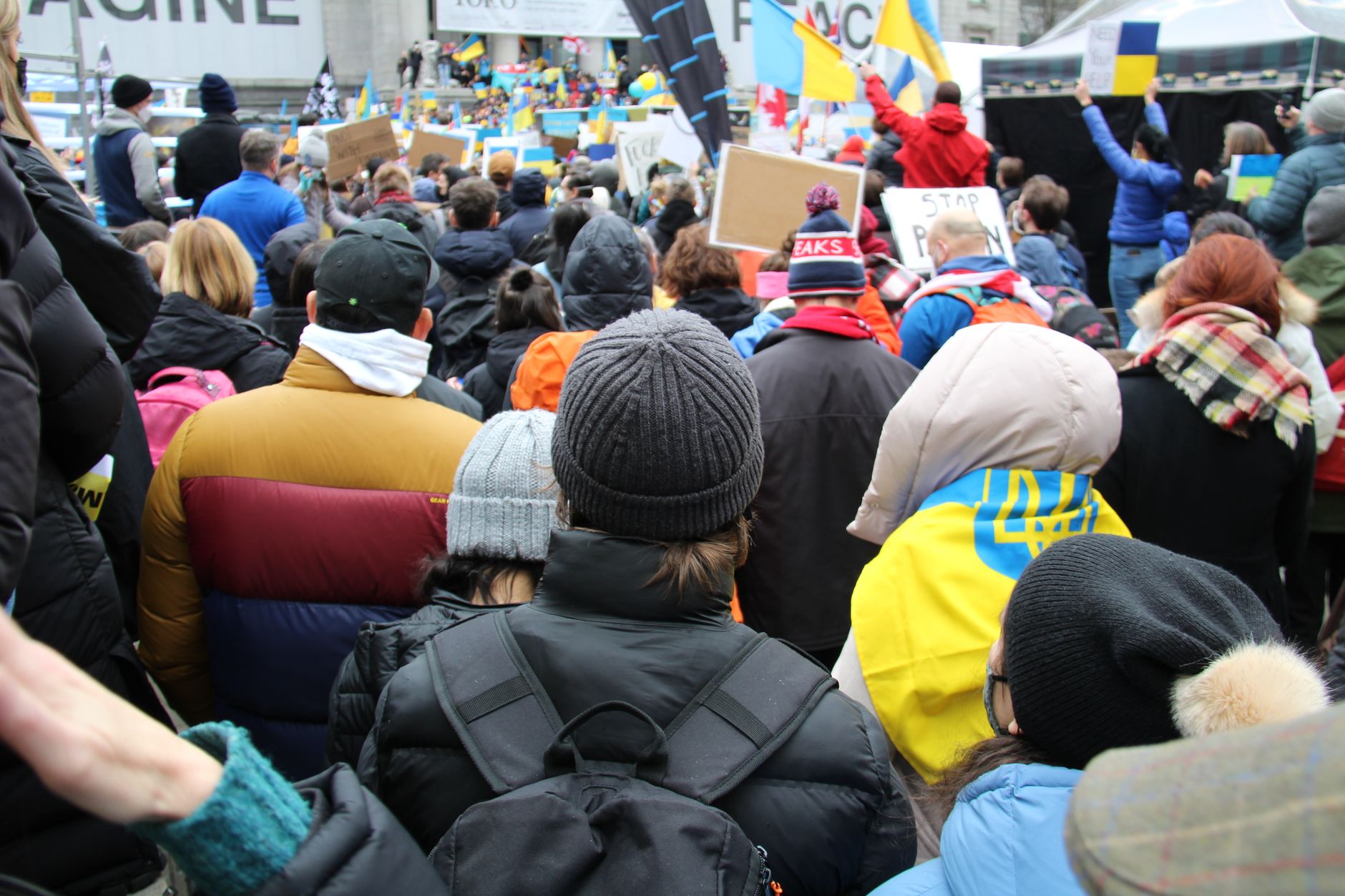
Hundreds of people, many of them teenagers and young adults, gathered outside the courthouse while the hearing dragged on. They carried apples, the party's founding symbol, sang songs, and chanted "Russia" and "Yabloko". When news of the verdict spread, the crowd erupted in chants of "Shame! Shame!" Videos on social media showed the raw emotion of the moment. Someone had written "For Yabloko. For freedom" in chalk on the pavement.
The public show of support was remarkable in itself. Since the start of the full-scale invasion, large gatherings have been effectively banned. Wartime censorship laws allow authorities to punish any expression of dissent with heavy fines or long prison sentences. For many in the crowd, the hearing was one of the few opportunities to stand together publicly without an immediate police crackdown, even though the risks were considerable.
Why the Kremlin changed its mind
Observers had initially thought the authorities might let Yabloko run, perhaps to use its historically marginal vote share to demonstrate that anti-war views were unpopular. The party won just 1.34% of the vote in 2021. But the calculus seems to have shifted. As anti-war sentiment becomes more visible despite the repression, allowing an opposition voice on the ballot may no longer seem like a safe idea.
The barring of Yabloko leaves the voter with no meaningful anti-war choice. It also removes a rare legal channel for expressing discontent with the war. The party is expected to appeal, but given the pattern of politically sensitive cases, the decision will almost certainly stand.
In the weeks before the vote, the implications are stark. Without Yabloko, many opponents of the war may simply stay home, while others will be forced to choose between candidates they see as irredeemable. The ruling reinforces the message that the Kremlin is no longer willing to tolerate even a symbolic challenge to its war policy, even from a party that has not been a real threat for over a decade.